










Infinity Mirrors
A mirror by day. Endless light by night.
- 4.7★ stars,463 reviews
- 5shapes
- 3sizes
- 2 yrguarantee
Quick answers
How much does an infinity mirror cost?
Our infinity mirrors cost $299.99 USD to $799.99 USD, depending on size. Size drives most of the price: a bigger frame needs more mirror, a longer run of LEDs and a heavier build. Shipping is free on every order.
How does an infinity mirror work?
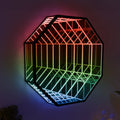
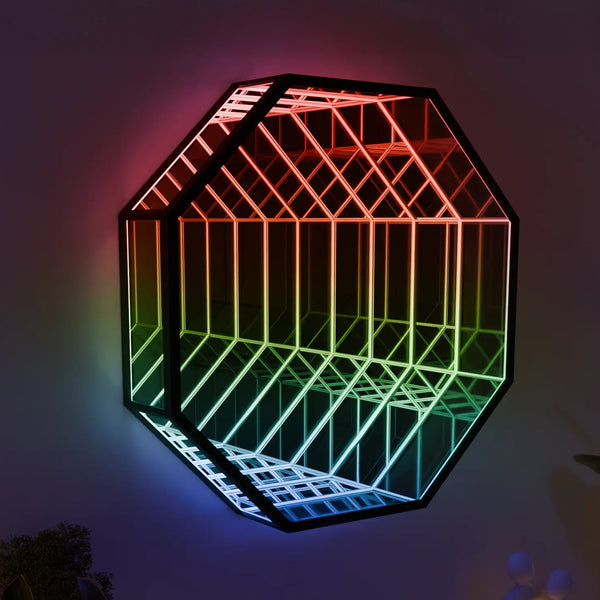
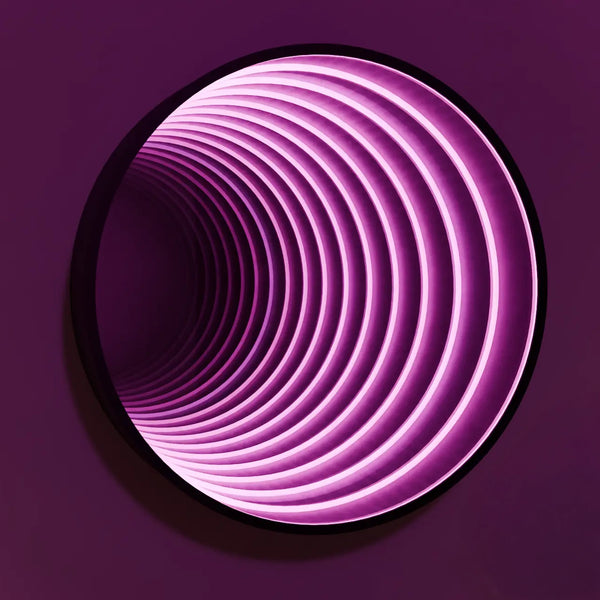
An infinity mirror has three layers: a fully reflective mirror at the back, a partly reflective panel at the front, and an LED strip around the frame between them. Light bounces between the two surfaces, and each reflection sits a little deeper and dimmer than the last. Your eye reads that fade as a tunnel of light running far behind the wall.
Which size fits my wall?
- 11.8″ (30 cm) from $299.99 USD
- 19.7″ (50 cm) from $599.99 USD
- 27.6″ (70 cm) from $799.99 USD
Measure the furniture below the mirror and choose a size about two-thirds of its width. Hang the center 57 to 60″ (145 to 152 cm) from the floor.
Can you see yourself in it?
Yes, in both states. With the LEDs off, the front panel gives a clear, true reflection like an everyday wall mirror. With them on, your reflection is still there, just much fainter, layered inside the tunnel of light.
What types of infinity mirrors are there?
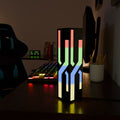
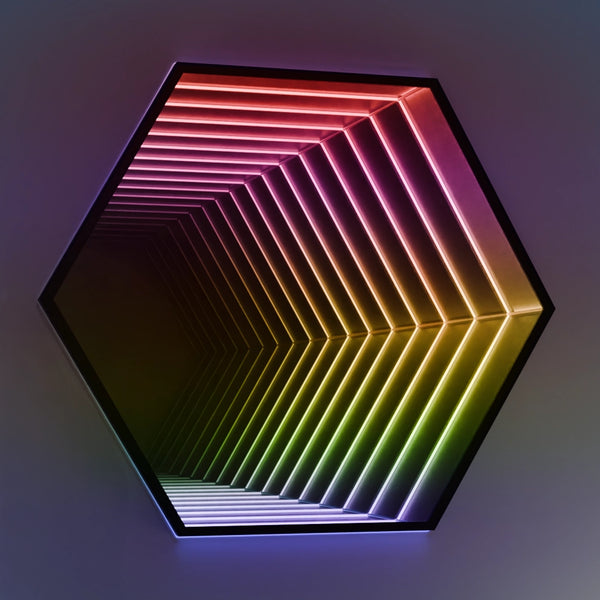
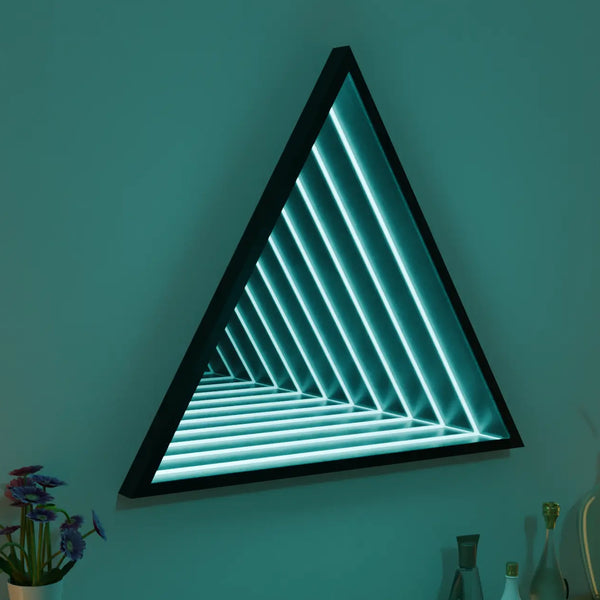
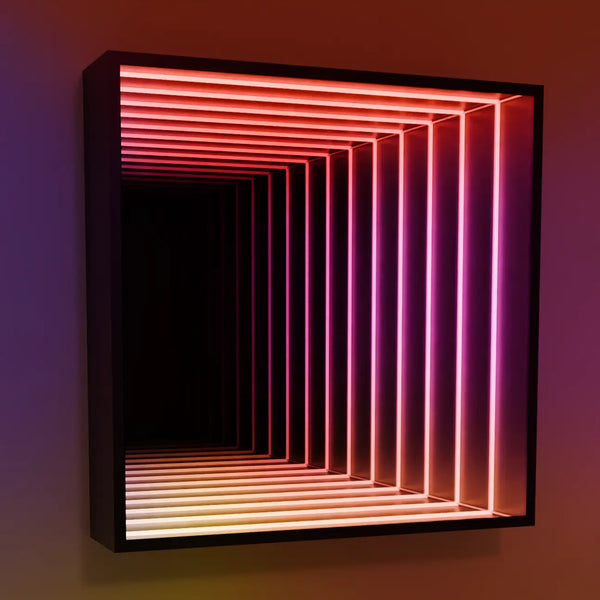
Most fall into four kinds: framed wall mirrors, tabletop pieces, room-size art installations and DIY builds. Wall mirrors are the most common at home. Ours come in five shapes (octagon, hexagon, square, triangle and round) and 3 sizes, from 11.8″ (30 cm) to 27.6″ (70 cm). Tabletop pieces such as the Infinity Cube and Infinity Pyramid sit on a shelf or nightstand. Art installations line a whole room with mirrors, and DIY builds use the same three layers in a homemade frame.
What are infinity mirrors used for?
At home, as a statement light: over a gaming desk, behind a home bar, on a bedroom wall or in an entryway. Switched off, it is a plain mirror; switched on, it lights the room. Studios hang them as a feature wall (TruFusion STL trains under OctaMirrors). The same effect shows up in mirror mazes, elevators and art installations.
Who invented the infinity mirror?
No one person. The effect appears whenever two mirrors face each other. An early account comes from 7th-century China: the Buddhist monk Fazang (643 to 712) is said to have set mirrors on every side of a Buddha statue lit by a lamp, so the empress could see endless reflections. In modern art, Yayoi Kusama made it famous with her first Infinity Mirror Room, Phalli's Field, in New York in 1965. A home infinity mirror puts the same effect inside one frame.
From the Journal
-
 Guide · 10 min read
What is an infinity mirror?
-
 Guide · 4 min read
Infinity Cube Light
-
 Guide · 4 min read
Gaming Room Decor
-
 Gift guide · 7 min read
11 Best Gifts for Gamers 2026


